
Check My Latest Blog Posts
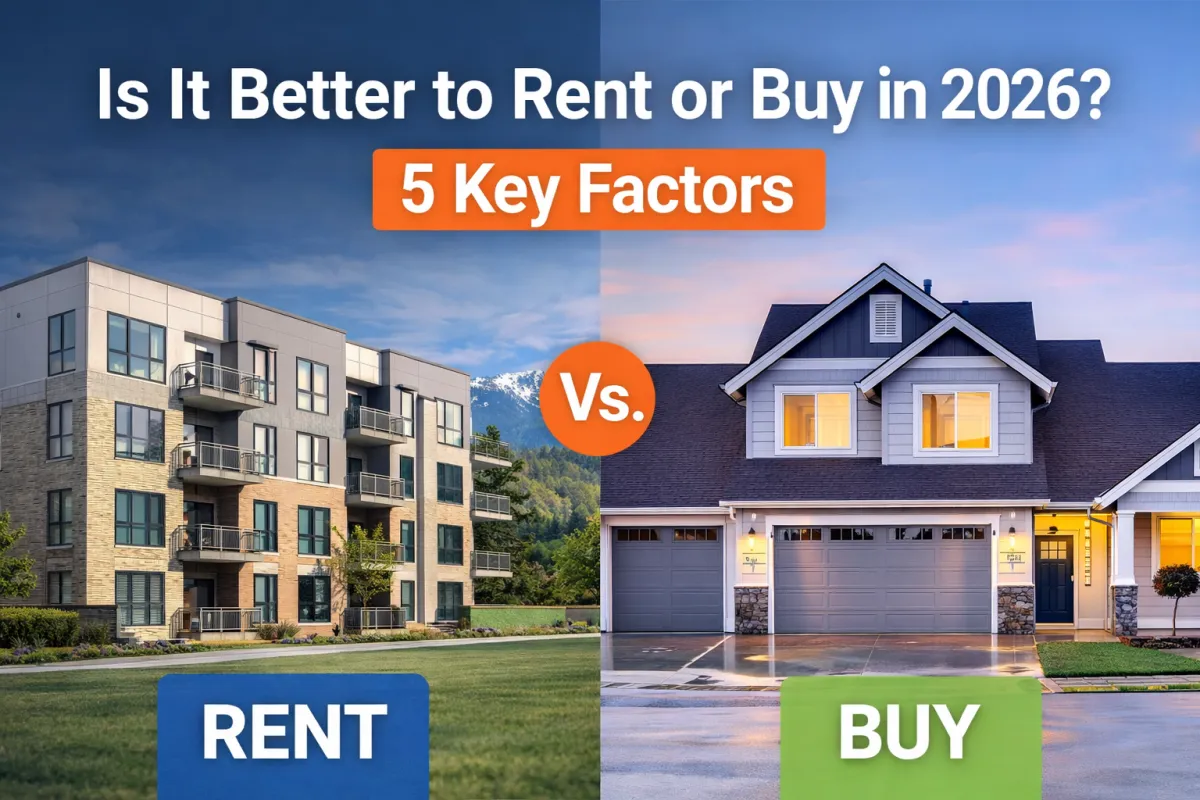
Is It Better to Rent or Buy in 2026? 5 Key Factors
If you’re trying to decide whether to rent or buy in 2026, the right answer depends on five key factors: monthly cost comparison, length of stay, market conditions, financial stability, and long-term goals. In many parts of Colorado, including Littleton and the greater Denver metro area, buying can make sense if you plan to stay at least five years and have stable income. Renting may be more practical if flexibility, short-term mobility, or cash preservation is your priority.
This question has become more common in 2026 as interest rates remain elevated compared to historic lows of previous years, inventory has improved slightly, and rental pricing has stabilized in certain submarkets. Buyers are more analytical today, and many are carefully weighing monthly payment differences against long-term equity growth.
Renting means you pay for housing without building equity, but you maintain flexibility and avoid maintenance costs. Buying typically involves higher upfront costs, including down payment and closing costs, but offers potential appreciation, tax advantages, and long-term wealth building. The decision is no longer emotional for most buyers — it is mathematical.
The first factor to analyze is your monthly payment comparison. In Littleton and surrounding south metro neighborhoods, mortgage payments in 2026 may still exceed comparable rent depending on price point and interest rate. However, rent increases over time, while a fixed-rate mortgage provides predictable principal and interest payments.
Second, consider how long you plan to stay. Real estate typically rewards long-term ownership. If you expect to move within two to three years, transaction costs can outweigh appreciation gains. Five years or more often shifts the equation in favor of buying.
Third, review market direction. Inventory levels in the Denver metro area have improved compared to the tight supply of previous years, creating more negotiating power for buyers. Sellers are adjusting pricing expectations in certain price ranges. That dynamic can present opportunities for buyers willing to commit long term.
Fourth, evaluate financial stability. Buying requires reserves. Lenders, especially in 2026 underwriting standards, look closely at debt-to-income ratios, job stability, and savings. Owning also means handling maintenance, property taxes, insurance increases, and potential HOA dues.
Fifth, clarify your long-term objectives. If building equity and leveraging real estate as part of your investment strategy is important, ownership may align better. If career mobility, lifestyle flexibility, or reducing responsibility is the priority, renting can be the more practical solution.
In Littleton specifically, lifestyle factors often influence the decision as much as numbers. Access to parks, schools, open space, and community amenities affects long-term satisfaction. Buyers relocating to the south Denver metro area frequently compare rental convenience with the stability of homeownership in neighborhoods like Sterling Ranch, Ken Caryl, and historic downtown Littleton.
Common mistakes include focusing only on interest rates, underestimating maintenance costs, or assuming rent is always “throwing money away.” Rent provides stability without repair risk. Buying provides leverage and equity growth potential. Both have trade-offs.
From my experience working with Colorado homeowners, heirs, and investors, the most confident buyers are those who run clear projections. They compare a five-year ownership scenario against a five-year rental scenario. They calculate appreciation assumptions conservatively. They factor in tax considerations and opportunity cost of capital. Once the numbers are laid out objectively, the decision usually becomes clearer.
In 2026, the market does not reward impulsive decisions. It rewards preparation, reserves, and realistic expectations. Buyers who approach the decision analytically tend to feel more secure regardless of which path they choose.
In summary, renting in 2026 may make sense if flexibility and short-term cost control are your goals. Buying may make sense if you plan to stay long term, have financial reserves, and want to build equity in a stable Colorado market. The right answer depends on your timeline, income stability, and personal objectives.
If you’re weighing the rent versus buy decision in Littleton or the greater Denver metro area, local data matters.
I’m David Novak, a Littleton Realtor with RE/MAX Professionals, known as the Problem Home Solver. I’ve helped hundreds of Colorado homeowners, heirs, and investors navigate older homes, outdated properties, inherited homes, and real estate decisions — with 251 closings and $138M in volume since 2016.
If you want to review real numbers specific to your situation, I’m happy to help.
Call or text 303-929-9660
Visit ProblemHomeSolver.com

Are you tired of feeling like you can't trust real estate agents?
You’re not alone—and that’s exactly why I do things differently. With 30+ years in real estate, from running a mortgage bank to flipping homes and helping hundreds of families buy and sell, I’ve seen the good, the bad, and the downright ugly. My job isn’t to “sell” you—it’s to guide you with straight answers, real numbers, and options that actually make sense for your situation.
And if you’re not in my area, no problem—I can connect you with a top, experienced agent you can trust in your market.
👉 Fill out the form on my contact page or reach out directly, and let’s talk about how I can help you make the right move without the games.
Facebook
Instagram
X
LinkedIn
Youtube
Website